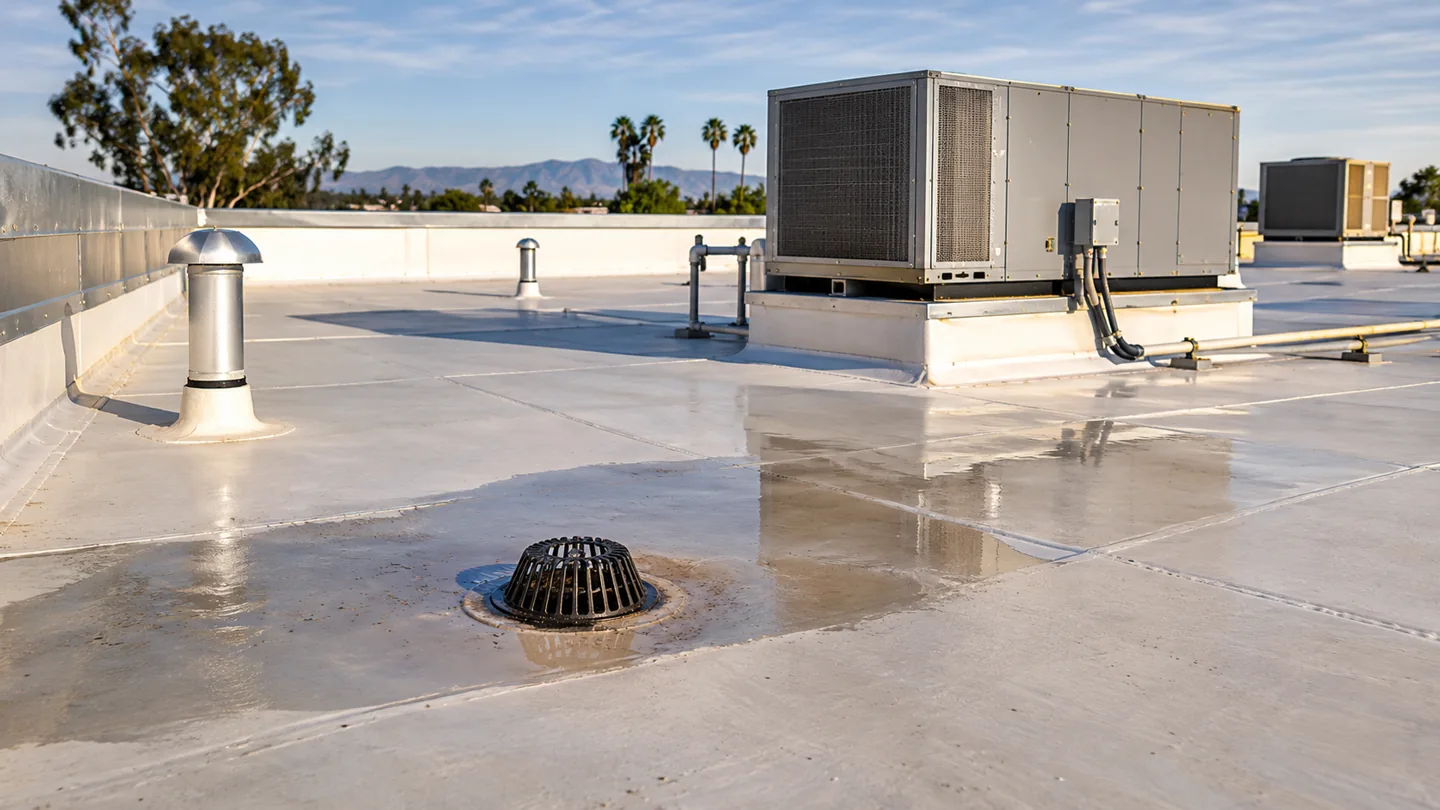
Commercial Roof Leak Repair in South Gate, California
Roof leak investigation for commercial properties around the Firestone Boulevard business corridor, industrial streets and the I-710 side of the city. Learn which roof details matter before discussing next steps with an available professional.
Roof leak concerns for South Gate commercial properties
Light manufacturing, warehouses, retail strips and commercial service buildings often feature mixed roof ages and equipment additions.
Aging roof flashings, patch layers and stormwater drainage points can hide the true path of water movement. The point where water appears indoors may be separated from the roof opening by decking, beams or insulation; tracing the entry path comes before choosing a patch.
Commercial low-slope roof membrane and equipment details relevant to South Gate.
Inspection priorities around the Firestone Boulevard business corridor, industrial streets and the I-710 side of the city
Before selecting a repair material, identify whether the covering is a thermoplastic single-ply membrane (TPO or PVC), EPDM rubber, modified bitumen, built-up roofing or metal. Each system has distinct seam, flashing and patch requirements. Repair materials should match the existing assembly and manufacturer's instructions.
When an older commercial building has several patch generations, a new leak may require opening or testing a limited area to determine whether moisture exists below the visible membrane. Another surface layer is not always the answer. The repair approach should follow the verified leak path rather than the visible interior stain alone.
Commercial roof services relevant to this building context
Commercial leaks can come from a roof's field membrane, perimeter edge, drains, expansion details or equipment penetrations. These repair topics are especially relevant to the roof details described for South Gate; a site assessment must determine which, if any, applies to your property.
Modified bitumen systems can leak through failed laps, splits, blisters, flashing transitions or damaged cap sheets. Repair methods vary with the existing system.
Inspection focus: Assess lap adhesion, surface condition, underlying moisture and the compatibility of patch materials.
Built-up roofs consist of multiple plies and surfacing. Leaks can involve splits, deteriorated flashing, blisters or water trapped within the assembly.
Inspection focus: Inspect the condition of the felts, gravel or coating, flashings and possible saturated insulation.
Flashing directs water away from changes in roof plane and adjoining construction. Failed counterflashing, terminations or sealant joints can create recurring interior leaks.
Inspection focus: Trace water paths around parapets, curbs, walls, edges and expansion points.
Planning safe access and a useful repair assessment
Gather repair history and identify whether earlier contractors applied coatings over older flashing or bituminous materials. For a productive site visit, provide interior leak locations, dates and conditions when the water was observed, roof age if known, access restrictions and previous repair information. Ask the professional to explain the identified entry point, substrate condition and suitability of localized repair.
Document where and when water enters the building; photograph affected areas if safe.
Record roof type, visible rooftop equipment and previous work if known.
Keep people and electrical devices away from active water intrusion.
Do not climb onto a wet, damaged or otherwise unsafe commercial roof.
Verify provider coverage, qualifications, insurance and proposed repair scope directly.
Discuss a commercial roof leak in South Gate
Call with the property city, roofing system and leak symptoms. This service-connection resource may be able to refer you to an independent roofing professional; no city-based office or appointment is promised.
Can repeated patching hide a larger roof system problem?
Aging roof flashings, patch layers and stormwater drainage points can hide the true path of water movement. The answer requires a professional assessment of the building’s actual roof assembly, rather than guessing from the location.
What information should a South Gate property manager provide?
The property type, specific leak location, roof material if known and when water intrusion occurs. Gather repair history and identify whether earlier contractors applied coatings over older flashing or bituminous materials.
Can a commercial roof leak repair be arranged in South Gate?
Call (833) 586-3848 to discuss your location and roof concern. Connection to a qualified independent provider depends on availability; licensing, insurance, scope and scheduling should be verified directly.