Commercial Roof Flashing Leak Repair
Roof-to-wall and edge transitions
Learn more →Built-up roofs consist of multiple plies and surfacing. Leaks can involve splits, deteriorated flashing, blisters or water trapped within the assembly.
Call (833) 586-3848Built-up roofs consist of multiple plies and surfacing. Leaks can involve splits, deteriorated flashing, blisters or water trapped within the assembly.
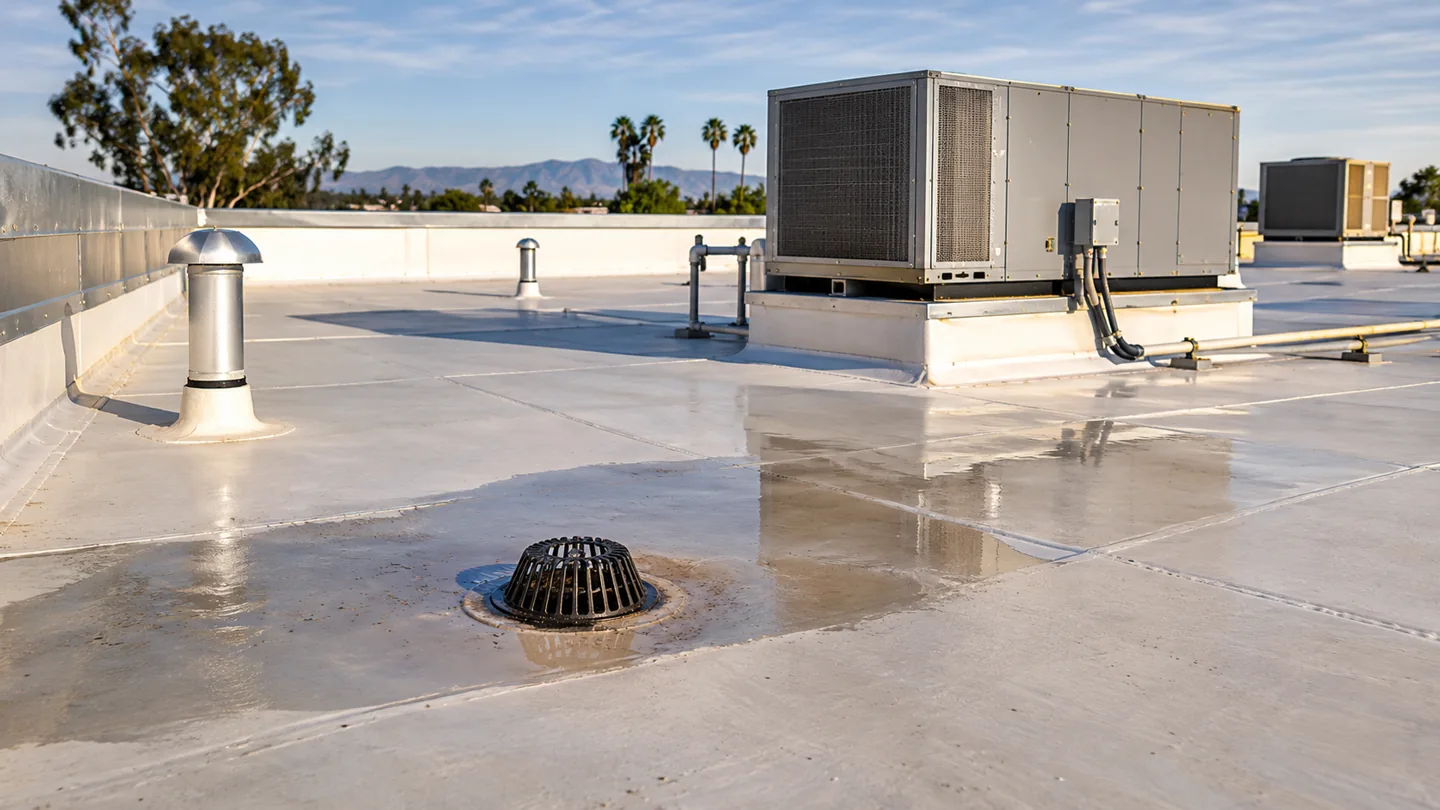
For commercial owners and property managers, roof leaks can affect insulation, interior finishes, equipment and normal operations. Water can migrate before showing indoors, so a visual stain does not always identify the actual entry point.
Open asphalt plies, gravel displacement, blistering or cracked base flashings. These observations help communicate the issue but do not confirm the source without inspection.
Inspect the condition of the felts, gravel or coating, flashings and possible saturated insulation.
Review layered felt condition, surfacing, possible wet insulation and where leaks migrate through the built-up assembly.
Localized compatible asphaltic work or reconstruction of compromised flashings may be recommended.
Important consideration: The visible top-surface crack may not correspond to the full extent of moisture below.
Any repair should address the actual water-entry path, not simply conceal an interior stain. The selected professional should evaluate surrounding materials, roof access, existing warranties and any work that may affect occupied spaces.
Call with your commercial property location, roof material if known, and observed leak symptoms. Confirm the provider’s availability and credentials before hiring.
Call (833) 586-3848Sun exposure, coastal moisture, seasonal rain and temperature variations affect roof assemblies differently across California. The exact building, material and drainage system should guide any inspection. For geographic context, explore California county guides or service-area information.
Built-up roofs consist of multiple plies and surfacing. Leaks can involve splits, deteriorated flashing, blisters or water trapped within the assembly. Open asphalt plies, gravel displacement, blistering or cracked base flashings.
Review layered felt condition, surfacing, possible wet insulation and where leaks migrate through the built-up assembly.
The visible top-surface crack may not correspond to the full extent of moisture below. The surrounding membrane or roof system must be evaluated first.
Roof-to-wall and edge transitions
Learn more →Seams and laps
Learn more →Drainage assemblies
Learn more →Waterproofing membrane
Learn more →Parapet and wall interfaces
Learn more →Discuss your roof type, leak symptoms and property location.