Orange County • Central Orange County manufacturing and civic centers
Commercial Roof Leak Repair in Santa Ana, California
Commercial property leak issues around the Santa Ana industrial districts, Civic Center and South Coast Metro. Review roof-system details and inspection priorities before discussing potential repairs.
Commercial roof leak concerns around the Santa Ana industrial districts, Civic Center and South Coast Metro
Older manufacturing roofs, medical offices, government-adjacent properties and multi-tenant facilities bring differing roof ages, rooftop penetrations and leak reporting needs.
Later additions or rooftop equipment changes can create interfaces between older bituminous systems and newer single-ply details, especially around roof walls. The affected interior room may not be beneath the actual water-entry point because water can travel through deck joints and insulation.
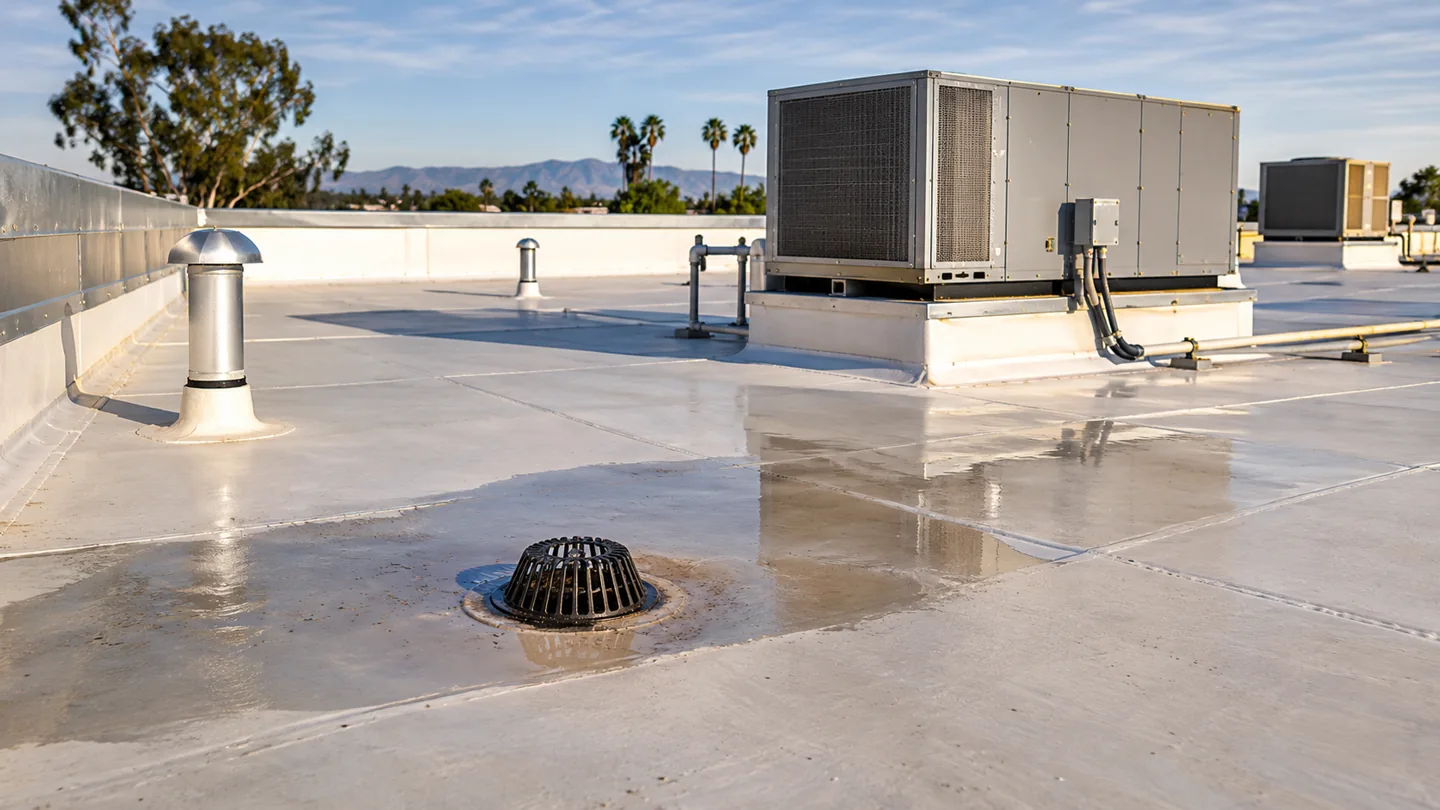
Illustrative roof photograph, not a completed project or a verified property in Santa Ana.
How a leak should be investigated in this building context
At a Santa Ana light-manufacturing building, an interior drip at a production bay might follow a roof deck flute from an equipment curb; applying sealant to the spot directly overhead would miss the source. This is a hypothetical example for inspection planning—not a claim about a project we completed.
Check roof additions and changes in membrane material, then map the apparent entry point against drainage direction and mechanical penetrations. Repair compounds and seam treatments should be compatible with the installed roof covering, whether TPO, EPDM, PVC, modified bitumen, BUR or metal.
Roof leak repair topics relevant to Santa Ana
The following repair categories relate to the roof details and commercial buildings described above. Actual repairs must be selected following a site assessment; water intrusion alone does not prove that a whole roof requires replacement.
Flashing directs water away from changes in roof plane and adjoining construction. Failed counterflashing, terminations or sealant joints can create recurring interior leaks.
Inspection focus: Trace water paths around parapets, curbs, walls, edges and expansion points.
HVAC curbs, duct penetrations and service activity can compromise roofing details. Water may enter around the unit even when the membrane field is sound.
Inspection focus: Evaluate curbs, counterflashings, service penetrations and nearby traffic damage.
Modified bitumen systems can leak through failed laps, splits, blisters, flashing transitions or damaged cap sheets. Repair methods vary with the existing system.
Inspection focus: Assess lap adhesion, surface condition, underlying moisture and the compatibility of patch materials.
Membrane leaks can involve punctures, splits, seam failure, aging or faulty terminations. Identifying membrane type is essential before choosing compatible materials.
Planning roof access and minimizing business disruption
Bring renovation dates, roofing invoices if available, production safety restrictions and a plan showing the interior problem location. Share photos of indoor water damage, the affected room or warehouse bay, any older leak reports and the known roof-maintenance history. Prioritize electrical safety and never enter a damaged or wet roof without qualified protection.
Record when the leak appeared and whether wind or rainfall affected it.
Identify the affected commercial unit and where water is visible indoors.
Provide roof age, membrane type or earlier repair records if known.
Do not attempt unsafe roof access or temporary work near energized equipment.
Confirm the independent professional's licensing, insurance, coverage and scope.
Discuss a commercial roof leak in Santa Ana
Call with your commercial property location, leak symptoms and roof type. This site may connect you with an independent roofing professional; no local office or immediate appointment is implied.
What information helps trace leaks on older Santa Ana commercial roofs?
Past reroofing records, roof plans, photos taken during rain and knowledge of additions or penetrations can help a professional distinguish old-system interfaces from newer failures.
What should a Santa Ana property manager report before an inspection?
Identify the building use, exact leak location, roof type if known and recent weather or equipment events. Bring renovation dates, roofing invoices if available, production safety restrictions and a plan showing the interior problem location.
Can a roofing professional be contacted for a Santa Ana property?
Call (833) 586-3848. Connections depend on availability; verify the independent provider’s licensing, insurance, scheduling and scope directly.