Santa Clara County • South County manufacturing and Monterey Road commerce
Commercial Roof Leak Repair in Morgan Hill, California
Commercial property roof leak concerns near Monterey Road, Cochrane Road, East Dunne Avenue, the US-101 corridor and Morgan Hill industrial parks. Explore local building contexts, roof assemblies and appropriate inspection questions.
Commercial property roof information • Morgan Hill, CA
Commercial roofing concerns in South County manufacturing and Monterey Road commerce
Morgan Hill combines manufacturing and R&D workplaces, auto and service businesses, retail centers, and smaller offices. Manufacturing facilities may use metal roof panels, equipment openings and exhaust stacks; retail buildings often feature low-slope membranes with multiple roof curbs. Building type determines which leak pathways are most plausible.
South Valley sun and seasonal rainfall can stress exposed fastener washers and mixed roof transitions over time. An inspection should evaluate each roof system independently rather than apply the same product to metal and single-ply surfaces.
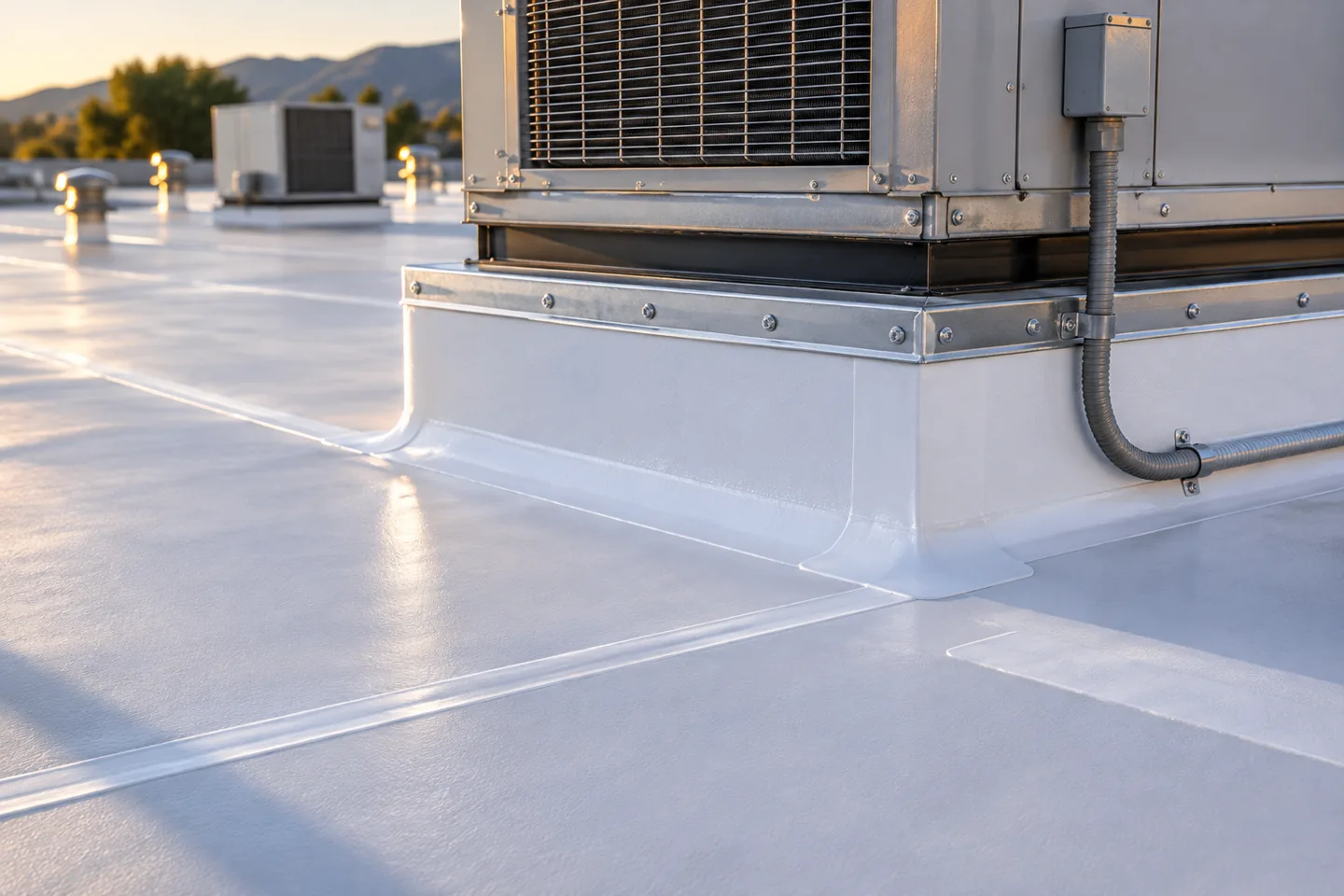
Illustrative commercial roof imagery, not a verified customer site or completed project in Morgan Hill.
Inspection example: tracing where water may have entered
A hypothetical workshop along Monterey Road reports staining near a roof vent after wind-driven rain. Before a generic patch, a professional would check metal panel laps, fasteners, boot flashing and whether an adjoining membrane-roof section is draining toward that point. This hypothetical illustration is provided for inspection planning; it is not a completed project or a description of an actual customer property.
Inspect metal panel end laps, roof-fastener gaskets, vent boots, skylight curbs and transitions between low-slope and pitched industrial roof sections. Determine substrate condition and compatible repair approach. Roof covering, manufacturer requirements and existing warranty conditions need to be identified before choosing materials or testing methods.
Repair areas related to this property context
The following commercial roof services correspond to details described on this page. A roofing professional must verify the actual water-entry route and whether the covering is TPO, PVC, EPDM, metal, built-up roofing or another assembly.
Metal roof leaks often develop at laps, fasteners, sealant joints, penetrations and movement-sensitive details. The right repair depends on panel profile and existing coating or finish.
Inspection focus: Review panel seams, exposed fasteners, closures, roof slope and thermal movement before selecting a repair.
Exposed fasteners, washers and attachment points may loosen or deteriorate over time. Repair should address the attachment and the surrounding waterproofing detail.
Inspection focus: Inspect fastener backing, washers, corrosion, movement and panel or membrane compatibility.
Roof vents and exhaust penetrations can leak where caps, collars, boots or flashings fail. The leak path can be different from the visible ceiling stain.
Inspection focus: Check vent caps, flashings, sealant transitions and the condition of adjacent roofing.
Pipes, conduits, supports and roof-mounted equipment interrupt the waterproofing plane. Poorly detailed penetrations can leak even when surrounding roofing is intact.
Membrane leaks can involve punctures, splits, seam failure, aging or faulty terminations. Identifying membrane type is essential before choosing compatible materials.
On metal assemblies, failed fasteners or localized lap details may warrant targeted work; a coating-only proposal should not bypass diagnosis of panel movement.
Do not equate surface rust staining with the actual leak entry without checking panel laps and transitions.
A ceiling stain alone does not show whether insulation is wet or whether a full roof replacement is needed. Confirm affected roof layers and the extent of the issue through appropriate inspection.
Records that help narrow the roof leak
Gather roof panel manufacturer information, fastener maintenance records, vent installation details and descriptions of any operation affected by rain.
Planning rooftop access and business continuity
Plan access around production and delivery schedules, isolate machinery where roof work could introduce debris, and check any overhead cranes or process exhaust hazards. Document symptoms from safe indoor areas. Avoid unsupervised roof access, particularly around wet surfaces, fall exposures or energized equipment.
Record leak timing and whether rain, wind or mechanical equipment operation coincided with it.
Photograph visible indoor water damage from a safe location.
Find roof plans, system/warranty information and previous repair records if available.
Keep people and inventory away from active drips and affected electrical fixtures.
Verify independent provider coverage, licensing, insurance and the work scope directly.
Discuss a commercial roof leak in Morgan Hill
Call with the city, roof type, affected room and leak timing. This referral site may connect you with an independent professional; it does not represent a local office or guarantee coverage or appointment timing in Morgan Hill.
What causes commercial metal roof leaks at a Morgan Hill workshop?
Possible causes include aging fastener washers, panel laps, roof-to-wall flashings and penetrations. A roofer must identify the panel system and actual leak path before selecting repairs.
What information should be shared before requesting a roof inspection in Morgan Hill?
Share the roof material if known, leak timing, indoor location and any recent rooftop alterations. Gather roof panel manufacturer information, fastener maintenance records, vent installation details and descriptions of any operation affected by rain.
Can an independent roofing professional be contacted for a Morgan Hill property?
Call (833) 586-3848 with the building location and roof symptoms. Availability, license, insurance, appointment timing and scope must be confirmed directly with a participating independent professional.